New parents often feel overwhelmed when their baby cries nonstop. A baby swing can change that moment. It gently rocks your little one while you catch a breath or handle a quick task. However, safety always comes first.
The American Academy of Pediatrics (AAP) stresses that babies need supervised awake time in swings only. Meanwhile, the Consumer Product Safety Commission (CPSC) reports thousands of nursery product injuries each year, many tied to improper use. To dive deeper into one popular portable option, check out baby swing buying guide for real parent insights on the Ingenuity Swing ‘n Go Deluxe.
This guide covers everything you need. You will learn safety rules, buying tips, and specific details on that deluxe model. Read on to keep your baby happy and safe.
What Is a Baby Swing and How Does It Work?
Parents love baby swings for their soothing motion. These devices mimic the gentle rocking you provide in your arms. Most models plug in or run on batteries. They offer different speeds, sounds, and sometimes vibrations.
Infants crave movement from their time in the womb. Swings deliver that rhythmic sway. Many babies calm down quickly when placed in one. Yet swings serve only for short, supervised sessions.
Modern swings include features like timers and harnesses. Manufacturers design them for newborns up to about nine months. Always check weight limits carefully.
Key Benefits of Baby Swings for Infants
Baby swings offer real help to families. First, they soothe fussy babies effectively. The steady motion often stops crying in minutes.
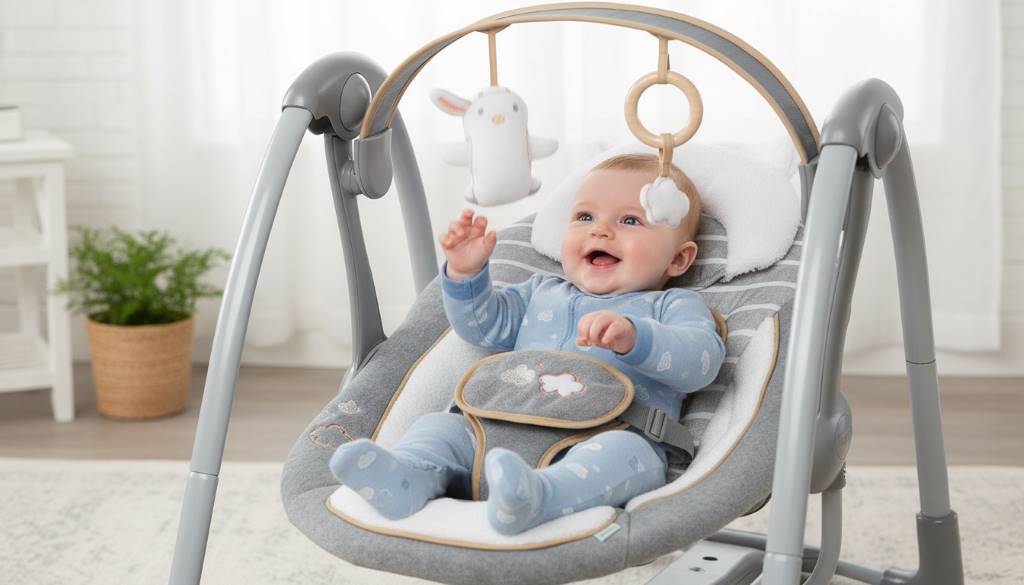
Next, parents gain hands-free moments. You can prepare a meal or comfort an older child while your infant swings safely nearby.
Additionally, swings support sensory development. Gentle rocking stimulates the vestibular system. This helps babies process balance and movement.
Moreover, many models play melodies or nature sounds. These calm newborns and create positive associations with quiet time.
Finally, portable swings travel easily. Families take them to grandparents’ houses or on vacations without hassle.
Essential Safety Guidelines Every Parent Must Follow
Safety leads every decision with baby gear. The AAP clearly states that swings are not for sleep. Babies must sleep on flat, firm surfaces only.
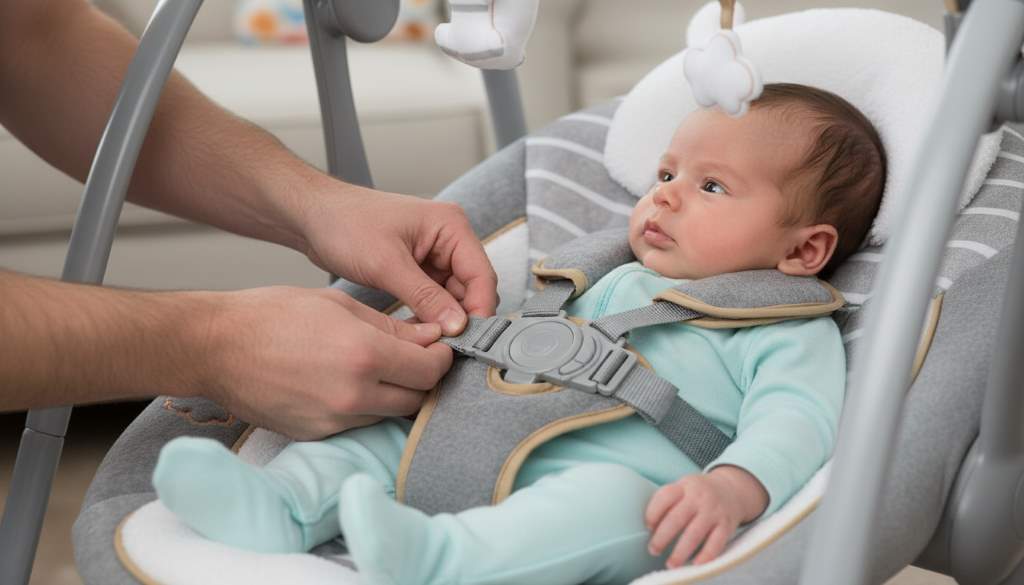
Always buckle the harness fully. A five-point system keeps your infant secure. Never skip this step.
Supervise constantly. Stay in the same room and watch your baby. Accidents happen fast.
Follow age and weight limits strictly. Most swings suit babies from birth to 20-30 pounds. Stop use when your child tries to climb out.
Position the swing on a flat floor. Avoid elevated surfaces like tables. Non-slip feet help stability.
Limit sessions to 30 minutes. Longer use can cause head flattening or neck strain.
Remove extra blankets or toys that could cover the face. Keep the area clear.
Check for recalls regularly on the CPSC website. Recent warnings highlight suffocation risks in some models.
Common Safety Mistakes and How to Avoid Them
Parents sometimes overlook simple risks. One frequent error involves letting babies sleep in swings. This raises suffocation danger because the head can slump forward.
Another mistake skips the harness. Babies wiggle more than you expect. Always secure every strap snugly but comfortably.
Placing swings on soft surfaces causes tipping. Stick to hard, level floors.
Overusing the swing daily leads to flat spots on the head. Balance with tummy time and holding.
Adding pillows or positioners violates safety standards. These items increase entrapment risks.
Ignoring the maximum weight limit strains the motor. Your baby could fall.
Complete Buying Guide: How to Choose the Right Baby Swing
Choosing a swing feels daunting with so many options. Focus on your family’s needs first.
Consider space. Full-size swings work in larger homes. Portable models fold flat for apartments or travel.
Look at power sources. Plug-in versions save money long-term. Battery models offer flexibility.
Check speed variety. Five or more speeds let you adjust as your baby grows.
Examine the harness. Five-point designs provide the best security.
Evaluate extras like sounds, toys, and vibration. These soothe some babies but overwhelm others.
Read independent reviews. Sites like BabyGearLab and Wirecutter test stability and noise.
Prioritize easy cleaning. Machine-washable seats save time.
Think about longevity. Some swings convert to toddler seats.
Finally, verify safety certifications. Look for JPMA seals and recent CPSC compliance.
Spotlight: Ingenuity Swing ‘n Go Deluxe Insights
The Ingenuity Swing ‘n Go Deluxe stands out for busy families. Parents praise its portability above all.
This model folds completely flat. You can store it behind a door or slide it into a car trunk easily.
It offers five swing speeds with TrueSpeed technology. The motion adapts as your baby gains weight.
Soft melodies and nature sounds play quietly. Volume control prevents startling your infant.
Two plush toys hang from a removable bar. Babies reach and bat at them during awake time.
A vibration option adds extra calm. Many parents report quicker settling with this feature.
The seat includes plush fabrics and cushioned shoulder straps. Comfort matters for longer sessions.
Non-slip feet keep the swing steady. The five-point harness clicks securely.
Cleanup proves simple. Remove the seat pad and wash it in the machine.
Users highlight the quiet motor. It runs smoothly even at higher speeds.
This swing fits babies from six pounds to around 20 pounds. Most families use it from newborn stage to about nine months.
Parents call it a lifesaver during colic evenings. One mother shared how it allowed her first shower in days.
Travelers love the lightweight frame. It moves from room to room without effort.
Overall, the Swing ‘n Go Deluxe balances features, safety, and convenience well.
Step-by-Step Guide: How to Set Up and Use a Baby Swing Safely
Start with assembly. Follow instructions exactly. Most models snap together in minutes.
Place the swing on a flat, hard floor. Keep it away from stairs, cords, or heaters.
Insert batteries or plug in securely. Test all speeds before placing your baby.
Adjust the seat recline if available. Newborns need more support.
Buckle the harness completely. Straps should fit snugly across shoulders, waist, and crotch.
Choose a gentle speed first. Observe your baby’s reaction closely.
Set the timer for 30 minutes maximum. Many models include this safety feature.
Stay nearby and watch. Talk or sing to your infant for bonding.
Remove your baby promptly when the session ends. Transition to floor play or holding.
Clean the seat regularly. Wipe the frame and wash fabrics as needed.
Store folded when not in use. This prevents tipping accidents.
Maintenance and Cleaning Tips for Longevity
Regular care keeps swings hygienic and functional. Wipe the frame weekly with mild soap and water.
Remove the seat pad according to instructions. Machine wash on gentle cycle.
Check harness straps for wear. Replace if frayed.
Inspect toys and bar for loose parts. Tighten or remove if needed.
Test the motor monthly. Listen for unusual noises.
Store in a dry place. Avoid direct sunlight to prevent fading.
Replace batteries promptly. Weak power affects swing motion.
Follow manufacturer cleaning guidelines. Harsh chemicals damage fabrics.
Related:
Games you can play in a children’s playground
When to Transition Away from the Baby Swing
Babies outgrow swings faster than parents expect. Stop use immediately when your child reaches the weight limit.
Watch for climbing attempts. This signals readiness to move on.
Most infants lose interest around nine to twelve months. They prefer floor exploration.
Introduce other soothing methods gradually. Rocking in arms or stroller walks help transition.
Prioritize tummy time and active play. These build strength and milestones.
Conclusion
Baby swings bring calm to chaotic days when used correctly. You now understand safety rules, benefits, and buying factors. The Ingenuity Swing ‘n Go Deluxe offers portability and soothing features that many families love.
Always put safety first. Supervise every moment, use the harness, and limit sessions. Your baby deserves gentle, secure comfort.
Choose a swing that fits your lifestyle. Read reviews, check certifications, and trust your instincts. Enjoy those peaceful rocking moments with your little one.
FAQs
Is it safe for my baby to sleep in a swing?
No. The AAP strongly advises against sleep in swings. Babies risk suffocation if their head slumps. Move them to a flat crib for all sleep.
How long can a baby stay in a swing at one time?
Limit sessions to 30 minutes. Longer use strains neck muscles and may cause positional plagiocephaly.
What harness type is safest for baby swings?
Five-point harnesses offer the best protection. They secure shoulders, waist, and between the legs.
Can I use a swing for a newborn?
Yes, with proper support. Choose models with newborn inserts and start on the lowest speed.
When should I stop using the baby swing?
Stop when your baby exceeds the weight limit or tries to climb out. Most families retire swings around nine months.
References
- American Academy of Pediatrics Safe Sleep Recommendations: https://www.aap.org/en/patient-care/safe-sleep
- CPSC Infant Swings Business Guidance: https://www.cpsc.gov/Business–Manufacturing/Business-Education/Business-Guidance/Infant-Swings
- Ingenuity Swing ‘n Go Deluxe Review: https://probabyguide.com/ingenuity-swing-n-go-deluxe-baby-swing-review/
- BabyGearLab Best Baby Swings Testing: https://www.babygearlab.com/topics/activity-soothing/best-baby-swing