
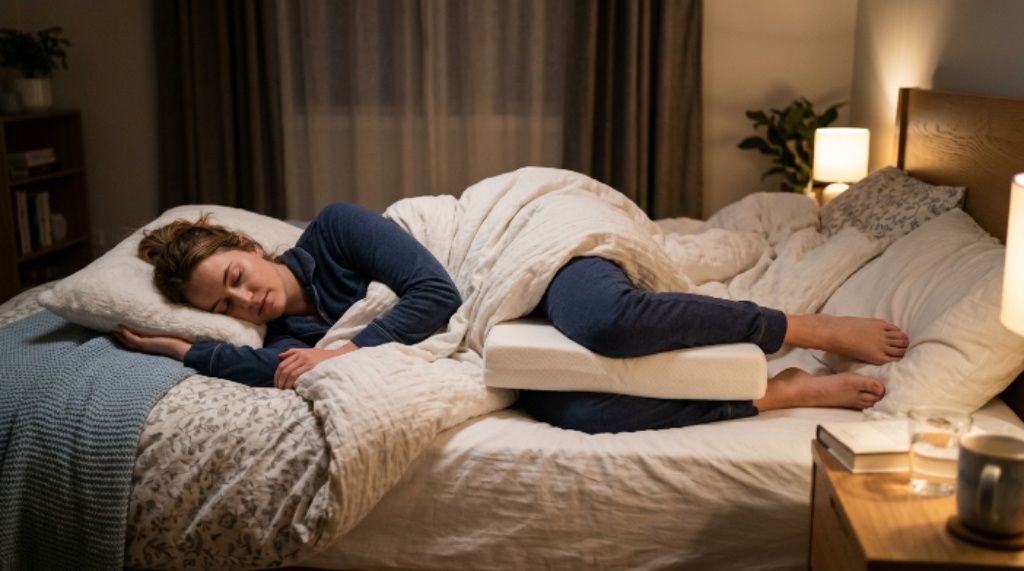
Waking up with a stiff back is one of the most common complaints doctors hear. Millions of people struggle with back pain every single night. The cause is often something most people never think about — their sleep position. Fortunately, one of the simplest fixes costs almost nothing. Placing a pillow between your legs while you sleep can make a surprisingly big difference. This article explains why it works, how to do it correctly, and what to look for in the right pillow.
Why Your Sleep Position Affects Your Back
Your spine does not switch off when you go to bed. It stays active in the sense that its alignment either improves or worsens depending on how you lie down. A poor sleep position puts constant pressure on the lower back, hips, and pelvis throughout the night.
Most people shift positions dozens of times while they sleep. However, the position you spend the most time in has the greatest impact. If your hips are twisted or uneven, your lower spine follows. Over time, this creates tension, inflammation, and the familiar morning ache that makes it hard to get out of bed.
Therefore, paying attention to how you sleep is not just a comfort issue. It is a health issue. Good sleep posture tips start with understanding that the spine needs to stay in a neutral position, just as it does when you are standing tall.
The Simple Logic Behind the Pillow Trick
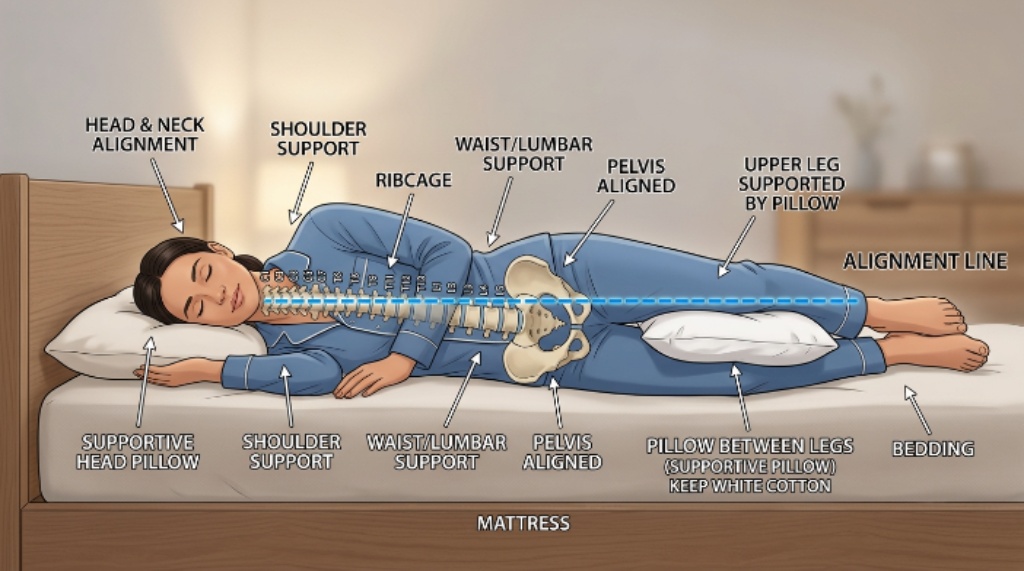
When you sleep on your side without any support between your legs, your top knee drops forward toward the mattress. This twists your hip and tilts your pelvis. Your lower spine then follows the tilt, bending slightly out of its natural curve.
Placing a pillow between your knees stops this from happening. The pillow keeps your knees, hips, and pelvis stacked evenly. As a result, your lower spine stays in a straighter, more relaxed position. The muscles along your back do not have to work to compensate for the misalignment. They can finally rest.
This is why so many physical therapists, chiropractors, and sleep specialists recommend the technique. It is low-cost, non-invasive, and easy to try tonight.
Who Benefits Most from This Method
Almost anyone with back pain can benefit, but some people see results faster than others. This method works especially well for people who:
- Sleep on their side most of the night
- Experience lower back stiffness in the morning
- Have been diagnosed with a herniated disc or sciatica
- Are pregnant and dealing with pelvic or hip pressure
- Suffer from hip pain or bursitis alongside back discomfort
Additionally, people recovering from back surgery are often advised by their doctors to sleep with a pillow between their legs. It reduces stress on the healing tissues and keeps the spine in a safe position during rest.
How to Position the Pillow Correctly
Knowing where to place the pillow matters just as much as using one. Here is how to do it properly.
The Side Sleeping Method
Lie on your side in a comfortable position. Draw your knees up slightly so they are bent at a gentle angle, roughly 30 to 45 degrees. Place the pillow lengthwise between your knees. Make sure it fills the gap all the way down to your ankles if possible. This prevents your ankle bones from pressing against each other, which can cause additional discomfort.
Your head pillow should also be the right height. It needs to keep your neck level with your spine. A pillow that is too flat or too thick throws the entire alignment off, even if your lower body is positioned well.
Adjusting for Sciatica
If you have sciatica, you may feel more relief sleeping on the side opposite the painful leg. Place the pillow between your knees as described above. Some people also benefit from tucking a small rolled towel under the waist to fill the gap between the mattress and the natural curve of the lower back. This extra support promotes better spine alignment sleep and reduces nerve pressure through the night.
The Back Sleeping Alternative
Not everyone sleeps on their side. If you prefer sleeping on your back, a pillow between the legs does not apply in the same way. Instead, place a pillow under your knees, not between them. This lifts the legs slightly and flattens the lower back against the mattress, relieving pressure on the lumbar spine. However, side sleeping with a pillow between the knees generally provides more targeted lower back pain relief for most people.
Choosing the Right Pillow for This Purpose
Not every pillow works well for this purpose. A regular head pillow is often too large or too soft to stay in place between the knees. Here is what to look for.
Firmness
You need a pillow that holds its shape under the weight of your leg. A pillow that flattens completely within minutes defeats the purpose. Look for medium-to-firm memory foam or latex options. They compress just enough to feel comfortable without collapsing entirely.
Shape
Many manufacturers now sell pillows specifically designed for between-the-knees use. These are often contoured or hourglass-shaped to fit naturally between the legs. They stay in place better than standard rectangular pillows and are easier to keep positioned throughout the night.
Size
The pillow should be large enough to support from the knee to the lower shin. A pillow that only sits at the knee level allows the lower legs to fall together, which partially reduces the benefit. A longer pillow solves this problem effectively.
Washability
Because this pillow will be in contact with your skin regularly, choose one with a removable, washable cover. This keeps the pillow hygienic and extends its lifespan.
Other Sleep Posture Habits That Support Back Health
Using a pillow between your legs is a great start, but it works best as part of a broader approach. These additional sleep posture tips can make a meaningful difference over time.
- Choose a mattress that supports your body without sagging. A mattress that is too soft allows the hips to sink lower than the shoulders, misaligning the spine.
- Avoid sleeping on your stomach. This position forces the neck to one side and flattens the natural lumbar curve, which increases stress on the lower back significantly.
- Stretch gently before bed. A few minutes of light stretching, such as a child’s pose or a knee-to-chest stretch, releases tension that has built up during the day.
- Keep your pillow setup consistent. Changing your setup every night makes it harder for your body to adapt and benefit from the improved alignment.
- Give the new position time. It may feel slightly unusual for the first few nights. Most people adjust within a week and begin to notice reduced stiffness by morning.
When to See a Doctor
A pillow between your legs is a helpful tool, but it is not a cure. If your back pain is severe, persistent for more than a few weeks, or accompanied by numbness and tingling in the legs, see a doctor. These symptoms can point to conditions like spinal stenosis, a herniated disc, or nerve compression that require professional treatment.
Similarly, if you try this method consistently for two to three weeks and notice no improvement, a physical therapist can assess your posture and sleep habits more thoroughly. They may recommend specific exercises or additional supports based on your individual situation.
Conclusion
Back pain does not have to be a permanent morning routine. Something as simple as placing a pillow between your knees can meaningfully improve how your spine rests during sleep. By keeping your hips and pelvis aligned, you reduce the twisting and tension that leads to stiffness and discomfort. The key is using the right pillow, placing it correctly, and pairing the habit with other healthy sleep practices.
Good spine alignment sleep starts with small, consistent changes. Lower back pain relief is often closer than people think. With the right pillow, the right position, and a little patience, most side sleepers begin to notice real improvement within days. Start tonight — your back will thank you in the morning.
Frequently Asked Questions
Which side should I sleep on to relieve lower back pain?
Either side can work, but many experts suggest sleeping on the left side for general health benefits. If you have sciatica, sleep on the side that does not have the painful leg. The most important factor is keeping your spine aligned with a pillow between your knees, regardless of which side you choose.
Can sleeping with a pillow between my legs help with hip pain too?
Yes. The same alignment that protects your lower back also reduces stress on your hip joints. By keeping the pelvis level, the hip on the lower side does not bear as much pressure. Many people with bursitis or hip arthritis find this position significantly more comfortable.
How long does it take to notice results?
Many people feel less stiffness within three to seven days of consistently using a pillow between their knees. However, the timeline varies depending on the severity of the pain and how well other sleep habits are maintained alongside this change.
Is a regular bed pillow good enough, or do I need a special one?
A regular pillow can work temporarily, but it often shifts during the night and flattens too quickly. A dedicated between-the-knees pillow, usually made of contoured memory foam, stays in place better and provides more consistent support throughout the night.
Can stomach sleepers benefit from a pillow placement technique too?
Stomach sleeping is generally not recommended for back pain because it strains the neck and lower spine. However, if you cannot break the habit, placing a thin pillow under your pelvis can slightly reduce spinal pressure. The best long-term solution is to gradually train yourself to sleep on your side with a pillow between the knees.
Related Topics:
Gut and Immune System Connection: How Microbiome Controls Immunity

