Starting your running journey is exciting. However, one of the first challenges you will face is picking the right pair of shoes. The wrong choice can lead to discomfort, injury, or burnout before you ever hit your stride. Therefore, understanding what to look for in entry-level running shoes is one of the smartest first steps you can take.
This guide will walk you through everything you need to know. You will learn about foot types, key shoe features, and how to shop with confidence. By the end, you will be ready to make a choice that supports your goals and keeps your runs enjoyable.
Why the Right Running Shoe Matters More Than You Think
Many beginners assume any athletic shoe will do the job. This is one of the most common mistakes new runners make. Running shoes are designed differently from walking or training shoes. They offer specific cushioning, support, and flexibility that protect your feet and joints during repetitive impact.
When you run, your foot absorbs up to three times your body weight with each step. Over time, the wrong shoe can lead to shin splints, knee pain, plantar fasciitis, or blisters. Therefore, investing in the right shoe from the start is not just a comfort decision. It is a health decision.
Understanding Your Foot Type First
Before you browse any store or website, you need to understand your foot type. This single factor will narrow your choices significantly.
There are three basic foot types based on arch height.
Flat feet, also called low arches, tend to roll inward when you run. This is called overpronation. Runners with flat feet usually need stability or motion-control shoes to prevent that inward roll.
Neutral arches are the most common foot type. Runners with neutral arches have a natural gait and can wear a wide range of shoe styles. Neutral cushioned shoes often work best.
High arches cause the foot to roll outward, which is called supination or underpronation. Runners with high arches need extra cushioning to absorb shock since their feet do not naturally distribute impact well.
The easiest way to identify your arch type is the wet foot test. Wet your foot and step onto a piece of paper or a dark surface. A flat footprint with little curve along the inside means low arches. A footprint with a narrow band connecting the heel and forefoot means high arches. A moderate curve suggests a neutral arch.
Additionally, many specialty running stores offer free gait analysis. A trained staff member will watch you walk or run and recommend shoe types based on how your foot moves.
Key Features to Look for in Beginner Running Shoes
Once you know your foot type, you can start evaluating specific shoe features. Here are the most important ones to keep in mind.
Cushioning is the most noticeable feature in any running shoe. It absorbs the shock of each step and protects your joints. Beginners often benefit from moderate to high cushioning because their bodies are not yet conditioned to the repeated impact of running.
Support refers to how the shoe guides your foot through each stride. Stability shoes have a firmer section on the inner side to prevent overpronation. Motion-control shoes offer even more correction. Neutral shoes provide balanced cushioning without added correction.
The heel-to-toe drop is the difference in height between the heel and the forefoot of the shoe. A higher drop, around 8 to 12 millimeters, is generally better for heel strikers, which is how most beginners naturally run. A lower drop encourages a more midfoot strike but may need an adjustment period.
Fit is perhaps the most important feature of all. Your shoe should have about a thumb’s width of space between your longest toe and the end of the shoe. Your heel should feel snug but not tight. There should be no pinching across the top or sides of your foot.
Breathability is another feature worth considering. Mesh uppers allow air to circulate, which keeps your feet cool and reduces the chance of blisters during longer runs.
Weight matters less for beginners, but lighter shoes generally feel more comfortable over distance. However, very lightweight shoes often sacrifice cushioning, so balance is key.
How to Shop for Your First Pair
Shopping for running shoes can feel overwhelming with so many options available. However, a few simple strategies can make the process much easier.
Shop at a specialty running store if you can. These stores employ staff who understand biomechanics and can guide you based on your foot shape and running goals. Unlike general athletic stores, they often carry a focused range of quality options.
Always try on shoes later in the day. Your feet naturally swell as the day goes on, so an afternoon fitting gives you a more accurate sense of how the shoe will feel during a run.
Wear the socks you plan to run in when you try on shoes. The thickness of your socks can change how a shoe fits significantly.
Walk and jog around the store before deciding. Pay attention to how the heel feels, whether your toes have room, and whether the shoe bends naturally at the ball of your foot.
Do not let price alone guide your decision. There are excellent starter fitness gear options available at mid-range price points. You do not need to spend a fortune to get a quality shoe, but extremely cheap shoes often lack the support and durability your feet need.
Popular Running Shoe Categories for Women Beginners
Different shoe categories serve different purposes. Knowing the main types helps you make a more informed choice.
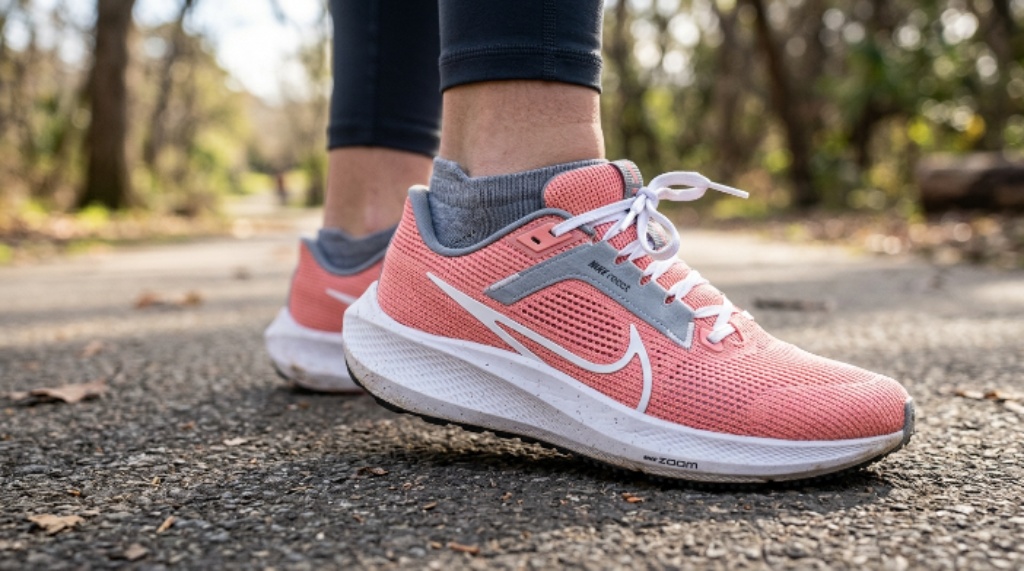
Road running shoes are the most common type and are designed for pavement, treadmills, and light gravel paths. They are lightweight and cushioned for smooth surfaces. Most beginner women runners will start here.
Trail running shoes have a more rugged outsole and extra grip for running on dirt paths, gravel, or uneven terrain. If you plan to run outdoors on natural surfaces, these are worth considering.
Treadmill shoes are similar to road shoes but may be slightly lighter since they do not need to handle outdoor conditions. However, most road shoes work perfectly well on a treadmill.
Cross-training shoes are designed for gym workouts and multi-directional movement. They are not ideal for running because they lack the specific cushioning and forward-motion support that running shoes provide.
Avoiding Common Beginner Mistakes
Many new runners make similar mistakes when buying their first pair. Being aware of these can save you time, money, and discomfort.
One mistake is choosing shoes based on appearance rather than function. A stylish shoe that does not match your foot type will hurt more than it helps. Additionally, many beginners buy shoes that are too small because they are not used to the extra toe space that running shoes require.
Another common error is waiting too long to replace worn shoes. Most running shoes last between 300 and 500 miles. After that, the cushioning breaks down and the shoe no longer protects you as intended. Therefore, pay attention to how your feet feel and check the outsole for uneven wear regularly.
Finally, do not skip the break-in period. Wear your new shoes on short runs first before committing to longer distances. This allows the shoe to adapt to the shape of your foot and helps you identify any fit issues early.
Conclusion
Choosing the right running shoes as a beginner does not have to be complicated. Start by understanding your foot type and arch. Then focus on cushioning, support, and fit when evaluating options. Shop at a specialty store when possible, try shoes on in the afternoon, and always wear your running socks during the fitting.
Remember that good entry-level running shoes do not have to be expensive, but they do need to match your biomechanics and running surface. Treat your shoe purchase as an investment in your long-term running health. With the right pair on your feet, you give yourself the best possible foundation for a sustainable and enjoyable running habit. Take your time, ask questions, and trust the process. Your feet will thank you.
Frequently Asked Questions
How much should I spend on my first pair of running shoes?
You do not need to spend a lot to get quality starter fitness gear. A good pair of beginner running shoes typically costs between $70 and $130. This range offers solid cushioning, support, and durability without overspending.
Can I use my regular sneakers for running?
Regular sneakers are not recommended for running. They lack the specialized cushioning, arch support, and flexibility that running shoes provide. Using them regularly can increase your risk of foot and joint pain over time.
How do I know if my running shoes fit correctly?
Your heel should feel secure without slipping. There should be about a thumb’s width of space at the toe, and the shoe should feel snug but not tight across the width. If you feel pinching, pressure, or numbness, the fit is not right.
How often should I replace my running shoes?
Most running shoes should be replaced every 300 to 500 miles. If you run three times a week for 30 minutes each session, you are covering roughly 10 to 15 miles per week. Therefore, plan to replace your shoes every six to twelve months depending on your pace and frequency.
Are stability shoes better than neutral shoes for beginners?
It depends on your foot type. Stability shoes are better for runners who overpronate, which is common with flat feet. Neutral shoes work well for runners with a natural or high arch. There is no universally better option, which is why knowing your foot type matters so much.
Related Topics:
How Much Exercise Should a Woman Over 50 Do?
Simple Exercises to Increase Flexibility for Beginners